.svg)


Somewhere in your organization right now, a new investigator-initiated study proposal is sitting in someone's inbox, waiting to be logged, routed, and reviewed. Five years ago, that queue was meaningfully shorter. The data now shows exactly how much.
The numbers
We pulled registration data from ClinicalTrials.gov in August 2026. New investigator-initiated studies (registrations that name a sponsor-investigator as the responsible party) grew from roughly 1,800 in 2020 to nearly 3,000 in 2025. That is a 63% increase in five years.
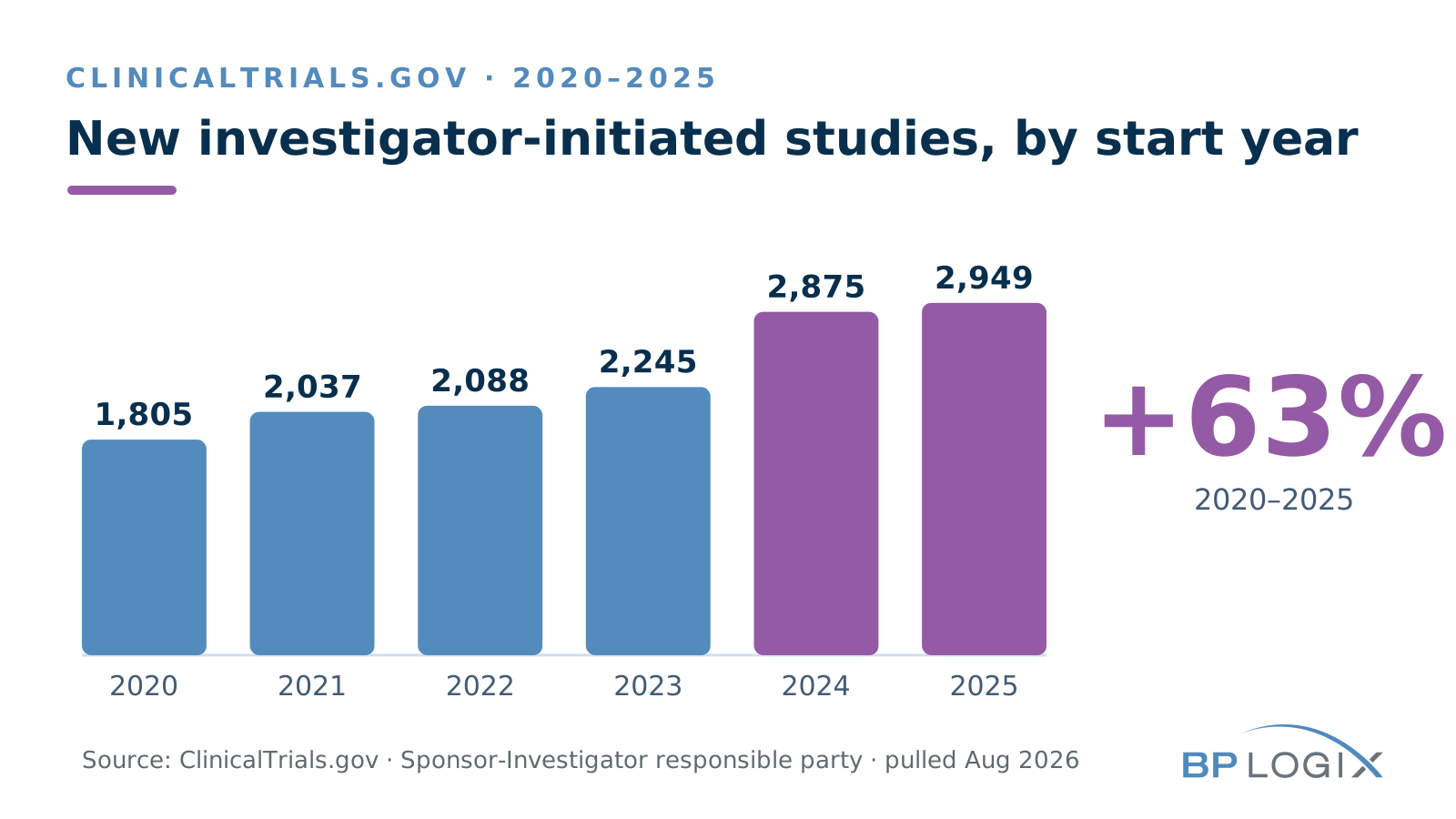
Nearly two-thirds of the five-year increase arrived in the last two years. Source: ClinicalTrials.gov, pulled August 2026.
The shape of the curve matters as much as its height. Volume grew modestly from 2020 through 2023, about 24% over three years. Then it accelerated: from 2023 to 2025 alone, new registrations climbed another 31%. If your IIS program feels busier than it did two years ago, the data agrees with you.
Investigator demand is outpacing the literature
Medical publication volume grew over the same window, but far more slowly. PubMed indexed about 1.58 million journal articles published in 2023 and about 1.77 million in 2025, a 12% increase. Investigator-initiated study volume grew roughly two and a half times faster than the literature itself.
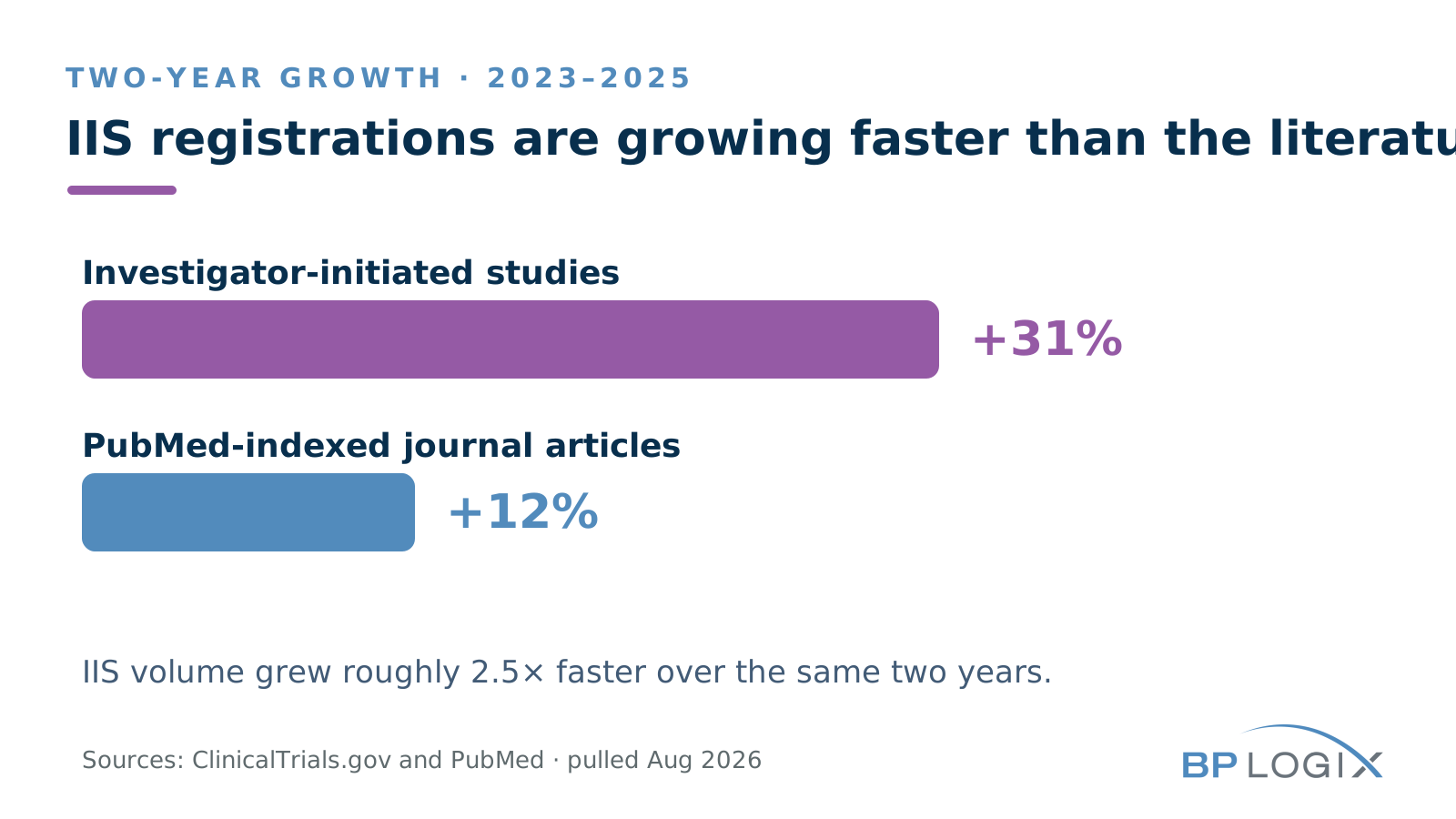
IIS registrations grew 31% from 2023 to 2025; overall publication volume grew 12%. Sources: ClinicalTrials.gov and PubMed, pulled August 2026.
That gap is worth sitting with: investigators are bringing sponsors more study proposals at a pace the broader research output can't explain. This is concentrated, sustained demand aimed directly at sponsor review programs.
What 63% more submissions actually means
Every additional submission lands somewhere: an intake step, a feasibility assessment, a review committee agenda, a budget decision, a contract, a safety reporting obligation. And one pattern keeps emerging in the Medical Affairs teams I talk to: the volume grew, and the infrastructure around it stayed still. The growth gets absorbed through effort. Longer committee meetings. More chased approvals. Another tab in the tracking spreadsheet.
Email and spreadsheets were workable tools at yesterday's volumes. At today's they create an ownership vacuum: submissions with no clearly accountable owner at any given moment, passive delays between steps, and decisions scattered across threads. None of this is a people problem. The practitioners managing these programs are doing exactly what their tools allow. The tools are the constraint.
Audit-readiness is a volume problem too
Rising volume compounds quietly in one more place: the audit trail. Every submission that moves through an inbox is a decision someone may eventually need to reconstruct, months or years later, from whatever the thread preserved. Reconstruction was painful at 2020 volumes. At current volumes and current growth, it stops being a realistic plan.
When we built Approvia IIS, we faced a fundamental question: help teams move faster inside the email-and-spreadsheet pattern, or replace the pattern with structured intake, defined ownership at every step, and an audit log captured as work happens. We chose to replace the pattern. Data like this is exactly why. A process that depends on individual heroics degrades quietly as volume rises. A structured workflow absorbs the rise by design.
About the data
IIS counts come from ClinicalTrials.gov registrations where the responsible party is designated "Sponsor-Investigator," the standard proxy for investigator-initiated studies, counted by study start year. It is a self-reported field rather than an audited category, so treat the figures as a strong directional signal. Publication counts are PubMed-indexed journal articles by publication year. Both datasets were pulled in August 2026; registration and indexing counts continue to update, so exact figures drift slightly upward over time.
Where this goes
The organizations handling this well treat rising IIS volume as a structural change, and they give their teams infrastructure to match: structured intake, clear ownership, audit-readiness by design. If you want a concrete starting point, we published a 90-day plan for automating the IIS review process that maps the transition step by step. The submissions are already arriving. The only open question is what they land in.